Introverts vs Extroverts: Understanding Personality Differences
If you’ve ever felt drained after a busy week and just wanted to stay home with a book while your friends headed out—or restless after too much alone time—you’re experiencing something deeply rooted in how your brain processes stimulation. These patterns aren’t flaws, weaknesses, or signs of mental health problems. They reflect your natural temperament…. Read more

Reviewed by The PsychPlus Team
December 4, 2025
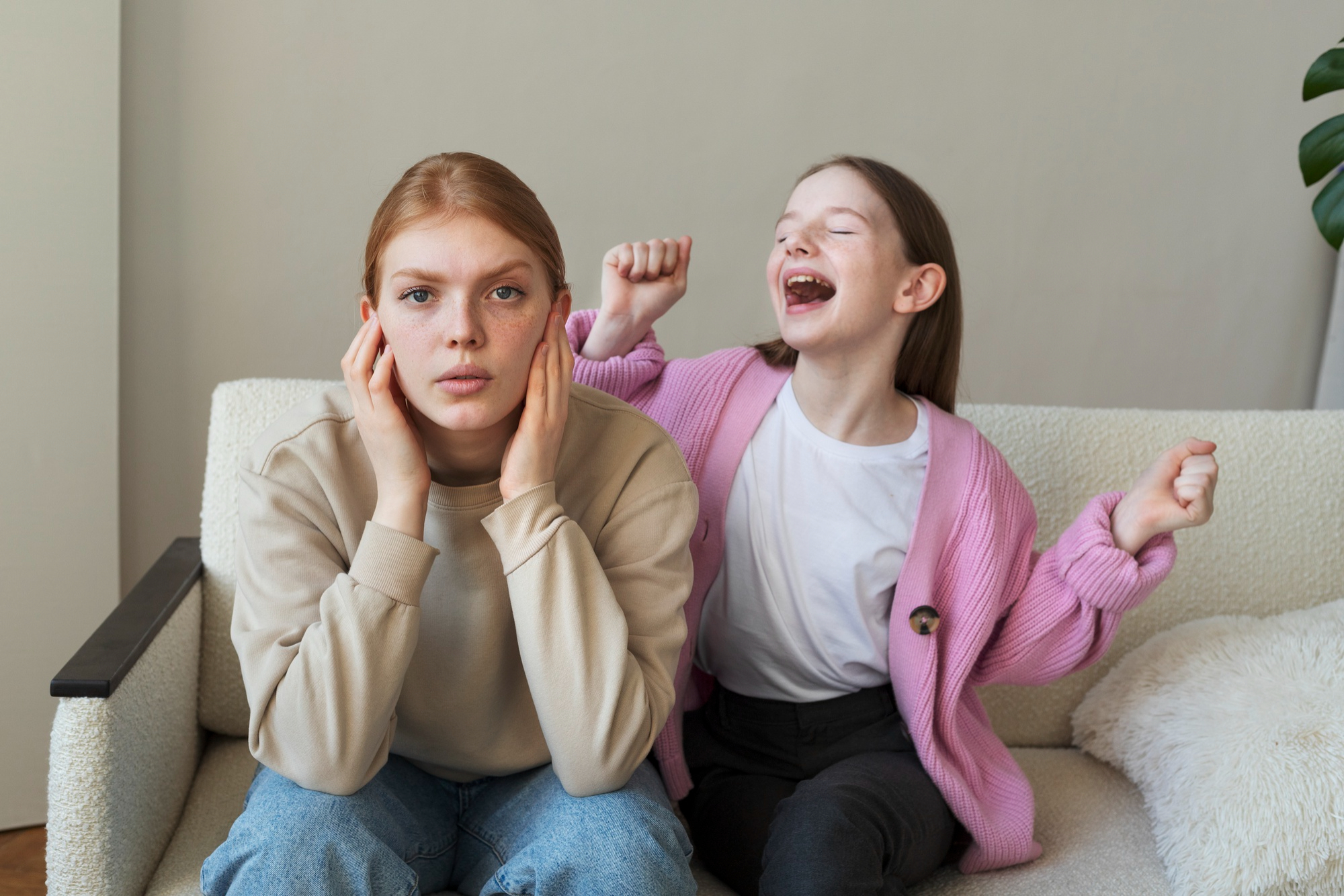
If you’ve ever felt drained after a busy week and just wanted to stay home with a book while your friends headed out—or restless after too much alone time—you’re experiencing something deeply rooted in how your brain processes stimulation. These patterns aren’t flaws, weaknesses, or signs of mental health problems. They reflect your natural temperament.
Understanding whether you lean more introverted or extroverted isn’t about fitting yourself into a box. It’s about recognizing what helps you function at your best.
Quick Overview: Introversion and extroversion describe how people recharge and respond to stimulation—traits supported by decades of personality research, including the Five-Factor Model [1]. They may involve differences in attentional systems, reward sensitivity, and nervous system arousal. Where you fall on this spectrum shapes your relationships, work habits, energy needs, and even mental health resilience.
This article provides educational information about personality and mental health. It is not a substitute for professional care. If you’re experiencing persistent anxiety, depression, or difficulty functioning, consult a qualified mental health provider.
Understanding the Introversion–Extroversion Spectrum
Here’s what people often get wrong: introversion and extroversion aren’t about shyness versus sociability—they’re about energy regulation and how your nervous system responds to external stimulation.
Here’s what people often get wrong: introversion and extroversion aren’t about shyness versus sociability—they’re about energy regulation and how your nervous system responds to stimulation. Some research suggests introverts process incoming information more deeply and may be more sensitive to overstimulation, while extroverts often seek environments that heighten reward activation [2- 3].
What Research Shows About Introverts
Some studies suggest introverts feel restored by solitude and more easily drained by prolonged stimulation—not because they dislike people, but because their nervous systems process incoming information more deeply.
The biological mechanisms remain an active area of research with many unanswered questions.
You may lean introverted if you:
- Feel tired after social events, even when you enjoyed them
- Prefer meaningful one-on-one conversations
- Need quiet time to recharge
- Think before speaking and prefer written communication
- Feel overstimulated in loud or busy environments
- Maintain a close inner circle
- Work best with independent, focused tasks
These traits describe healthy introversion, not depression or anxiety. If you experience persistent distress, consider seeking professional support.
What Research Shows About Extroverts
Some studies suggest introverts feel restored by solitude and more easily drained by prolonged stimulation—not because they dislike people, but because their nervous systems may process sensory and social input more intensively [4]. The biological mechanisms are still emerging, and many questions remain unanswered.
You may lean introverted if you:
- Feel tired after social events, even when you enjoyed them
- Prefer meaningful one-on-one conversations
- Need quiet time to recharge
- Think before speaking and prefer written communication
- Feel overstimulated in loud or busy environments
- Maintain a close inner circle
- Work best with independent, focused tasks
These traits describe healthy introversion—not depression. Despite common misconceptions, introversion itself is not a clinical condition [5].
The Spectrum Reality
Most people fall somewhere between the extremes. Twin studies suggest personality traits—including introversion and extroversion—are moderately heritable but strongly shaped by environment and learning [6].
Personality expression can also shift across environments. You may feel extroverted at work but introverted at home.
| Introverts | Extroverts | |
| Energy Source | Energized by solitude | Energized by social interaction |
| Need recovery after social events | Drained by too much alone time | |
| Communication | Think before speaking | Think out loud |
| Prefer written communication | Prefer verbal processing | |
| Social Preferences | Small groups, depth | Larger gatherings, breadth |
| Work Style | Focused, independent | Collaborative, dynamic [7] |
These are general patterns—not rules. Genetics, environment, culture, and life experiences interact to shape how your traits appear.
The Science Behind the Differences
The Science Behind the Differences
You don’t need a brain scan to validate your personality, but research offers helpful clues on wiring that may be contributing.
Brain Chemistry Differences
Dopamine pathways have been proposed as a contributor to extraversion—specifically how individuals respond to reward cues—but a 2015 review found findings inconsistent and inconclusive [3].
Brain Structure Findings
A small 1999 PET study found greater frontal lobe blood flow in introverts and higher sensory–reward activity in extroverts [8], but the sample size was tiny. A 2019 meta-analysis showed structural associations with extraversion in certain brain regions, though correlations remain modest [9].
Bottom line: Biological research is promising but not definitive. Environment, learning, and cultural context shape personality expression as much as biology.
Mental Health Considerations
Introversion Is NOT Depression
Introverted traits—needing quiet, valuing a small social circle, preferring depth—are not symptoms of mental illness. Some studies show a small association between introversion and depression, but neuroticism is a far stronger predictor [10-11].
Under chronic stress or environments that don’t respect their need for decompression, introverts may be more vulnerable due to rumination or limited recovery time.
The Extrovert’s Mental Health Challenges
Extroverts may struggle with prolonged solitude. Early pandemic research showed many extroverts experienced distress during lockdowns due to reduced social stimulation [12].
Sensation-seeking may also increase risk-taking if coping strategies are limited.
When to Seek Help
Seek support if you experience:
- Persistent sadness or hopelessness
- Significant appetite or sleep changes
- Loss of interest in activities
- Difficulty functioning
- Thoughts of self-harm
These symptoms go beyond personality differences and warrant professional care.
Navigating Workplace Challenges
The Extroversion Bias
Many workplaces reward outward enthusiasm, quick verbal input, and networking. Extroverts often rise to leadership more quickly—not always because they perform better, but because they are more visible [13-14].
Strategies for Introverts
- Request agendas or prep time in advance
- Build recovery time into your schedule
- Leverage strengths such as deep focus and strong written communication
- Decline optional events strategically
What Extroverts Should Know
Supporting introverted colleagues improves collaboration. Silence often signals mental processing—not disengagement.
Relationship Dynamics
Introvert–extrovert pairings can be deeply complementary when communication is strong.
Scripts for Introverts:
- “I need some quiet time to recharge. Can we reconnect later?”
- “I want to think this through before we discuss it.”
For Extroverts:
- “I’m feeling disconnected. Can we plan quality time?”
- “Talking this through helps me process—can you listen for a minute?”
A couples therapist can help partners balance their natural wiring.
Supporting Children
Children express personality traits early, even before they can explain their needs.
| Introverted Children | Extroverted Children | |
| What They Need | Quiet spaces, transitions, preparation | Social contact, active engagement |
| What Helps | Validating solitude, reducing overstimulation | Structure for talkativeness, chances for interaction |
| Red Flags | Extreme withdrawal or distress | Extreme impulsivity or disruptive behavior |
Consult a clinician familiar with child development for guidance.
Moving Forward With Self-Acceptance
Wherever you fall on the spectrum is entirely valid. Cultural norms often idealize extroversion, but both personality styles offer profound strengths [15].
Questions to explore:
- Am I honoring my natural energy patterns?
- Which environments help me thrive?
- Have I been forcing myself into a style that doesn’t fit?
- Have I been taking care of myself–body and mind? Factors such as sleep, lifestyle and nutrition all play a role in self-care and helping to regulate our emotions.
If these questions feel difficult or emotional, a therapist can help you explore identity, boundaries, and authenticity.
At PsychPlus, our clinicians understand the interplay between personality and mental health and can help you develop strategies that align with your natural temperament.
KEY TAKEAWAY
Your position on the introversion–extroversion spectrum is not a flaw—it’s a guide. Understanding your natural wiring helps you communicate your needs, make aligned choices, and build a life that works with your energy, not against it.
- Costa PT, McCrae RR. Revised NEO Personality Inventory (NEO-PI-R) and NEO Five-Factor Inventory (NEO-FFI): Professional Manual. Psychological Assessment Resources; 1992.
- Depue RA, Fu Y. On the nature of extroversion: Variation in conditioned contextual activation of dopamine-facilitated affective, cognitive, and motor processes. Front Hum Neurosci. 2013;7:288. https://doi.org/10.3389/fnhum.2013.00288
- Wacker J, Smillie LD. Trait Extraversion and Dopamine Function. Soc Personal Psychol Compass. 2015;9(6):225-238. https://doi.org/10.1111/spc3.12175
- Fishman I, et al. Do extraverts process social stimuli differently from introverts? Soc Cogn Affect Neurosci. 2011;6(4):486-492. https://doi.org/10.1093/scan/nsq082
- Granneman J. Yes, I’m an Introvert. No, I’m Not Depressed. Psychology Today. 2017. https://www.psychologytoday.com/us/blog/the-secret-lives-introverts/201701/yes-im-introvert-no-im-not-depressed
- Polderman TJ, et al. Meta-analysis of the heritability of human traits based on fifty years of twin studies. Nat Genet. 2015;47(7):702-709. https://doi.org/10.1038/ng.3285
- Barrick MR, Mount MK. The Big Five personality dimensions and job performance: A meta-analysis. Pers Psychol. 1991;44(1):1-26. https://doi.org/10.1111/j.1744-6570.1991.tb00688.x
- Johnson DL, Wiebe JS, Gold SM, et al. Cerebral blood flow and personality: A positron emission tomography study. Am J Psychiatry. 1999;156(2):252-257. https://doi.org/10.1176/ajp.156.2.252
- Li W, et al. Brain gray matter correlates of extraversion: A systematic review and meta-analysis of voxel-based morphometry studies. Hum Brain Mapp. 2019;40(16):4738-4757. https://doi.org/10.1002/hbm.24735
- Jylhä P, et al. Neuroticism, introversion, and major depressive disorder–traits, states, or scars? Depress Anxiety. 2009;26(4):325-334. https://doi.org/10.1002/da.20385
- Santor DA, et al. Evaluating stability and change in personality and depression. J Pers Soc Psychol. 1997;73(6):1354-1362. https://doi.org/10.1037/0022-3514.73.6.1354
- Wei M. Social Distancing and Lockdown—An Introvert’s Paradise? An empirical investigation. Front Psychol. 2020;11:561609. https://doi.org/10.3389/fpsyg.2020.561609
- Barrick MR, Mount MK. The Big Five personality dimensions and job performance: A meta-analysis. Pers Psychol. 1991;44(1):1-26. https://doi.org/10.1111/j.1744-6570.1991.tb00688.x
- Judge TA, Bono JE, Ilies R, Gerhardt MW. Personality and leadership: A qualitative and quantitative review. J Appl Psychol. 2002;87(4):765-780. https://doi.org/10.1037/0021-9010.87.4.765
- Cain S. Quiet: The Power of Introverts in a World That Can’t Stop Talking. Broadway Books; 2012.
Find a mental health care provider near you
Learn about the conditions we treat